Kettil – Sweden’s most powerful medieval man
Viking Age
AD 800 – AD 1100
Middle Ages
AD 1050 – AD 1520
Modern Age
AD 1520 – AD 2025
Kettil Karlsson Vasa was born around 1433 into a wealthy and influential family. From early on he strove for the highest power. After his years of study, he became a canon, a member of the cathedral chapter, at Uppsala Cathedral. In 1458, Kettil Karlsson was appointed coadjutor, assistant to the ageing bishop of Linköping. The following year, in 1459, he succeeded him. At just about twenty-six years old, Kettil Karlsson was now bishop of Linköping.
At the Swedish History Museum you can see Kettil Karlsson’s mitre, the ceremonial headpiece worn by bishops.
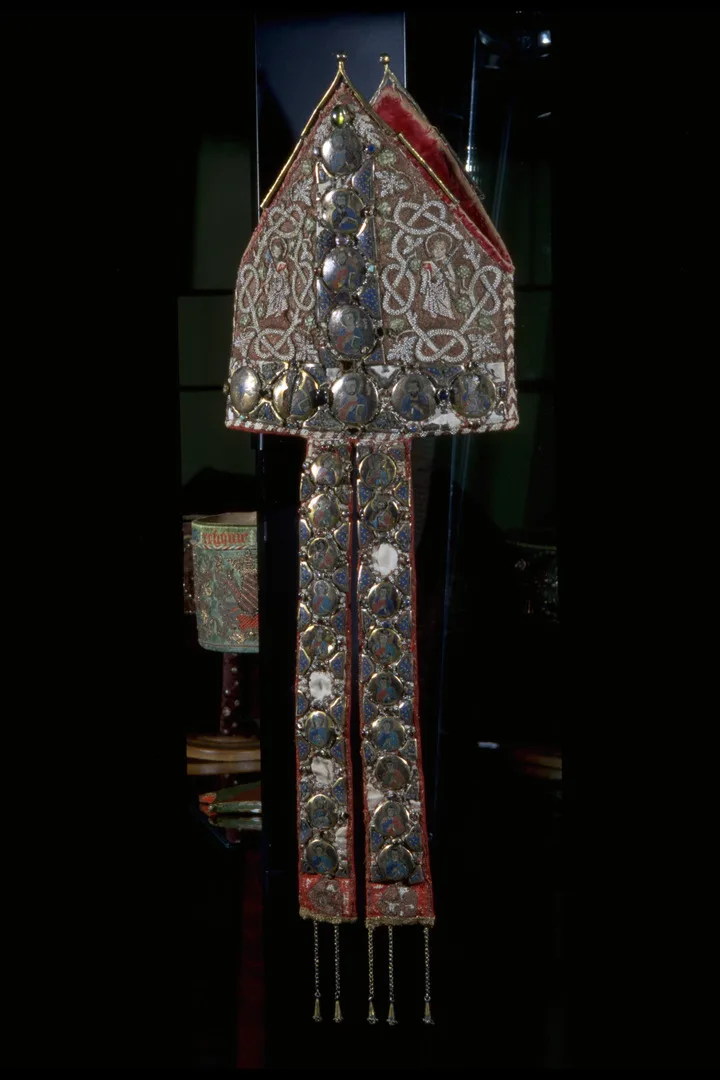
Kettil Karlsson's mitre
A symbol of authority
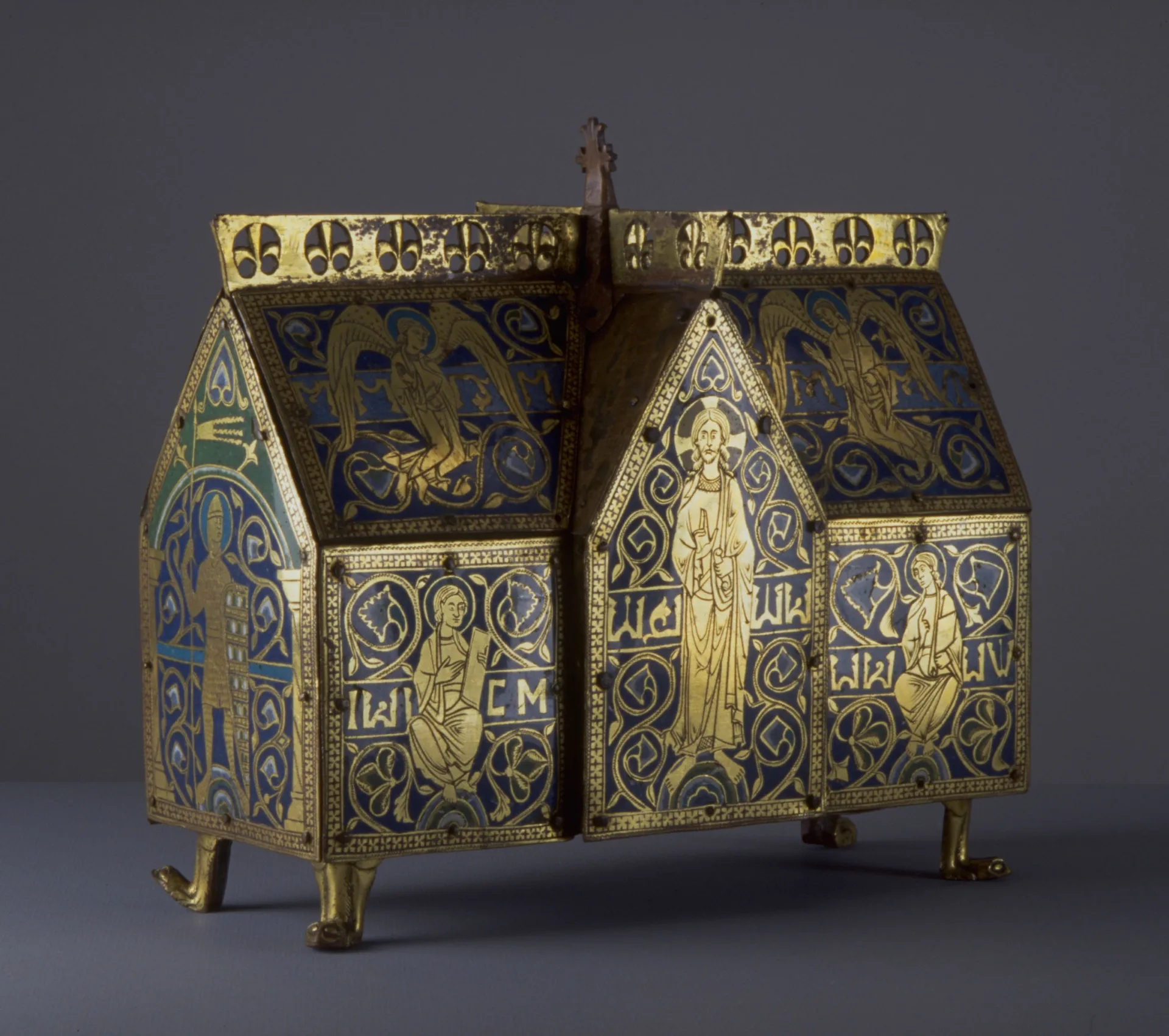
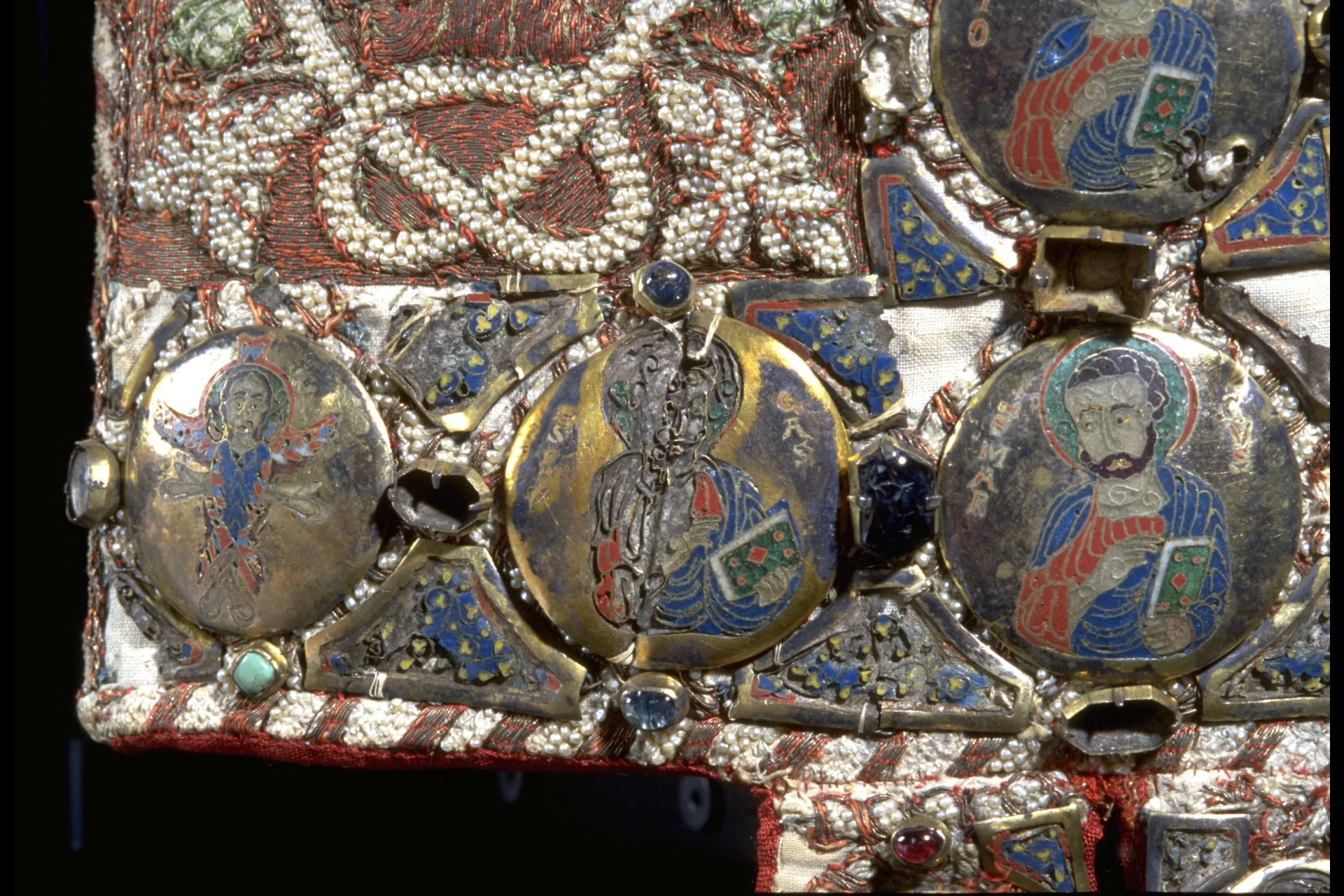
Kettil either had the mitre made immediately upon taking office, or he received it as a gift from the sisters of Vadstena abbey. The mitre radiated power, luxury and ambition. The round plaques are of gilded silver inlaid with cloisonné enamel, an ancient technique in which patterns are outlined with fine metal wires and then filled with gemstones or enamel in varied colours.
These plaques once adorned another mitre before being reused here. The nuns of Vadstena embroidered the fabric with gold, silk and pearls, depicting the Annunciation with the angel Gabriel and Mary, alongside the cathedral’s patron saints Peter and Paul.
Kettil Karlsson at war
Kettil Karlsson twice took up arms. The first time was in 1464, when his cousin Jöns Bengtsson (Oxenstierna) was imprisoned by King Christian I. With an army of peasants, men from Dalarna and mounted retainers, he managed after protracted fighting to defeat the royal forces at Hälleskogen, north of Haraker Church. The bishop now stood as the most powerful man in Sweden.
The second time came in the winter of 1464-65. The bishop rose in rebellion against the once more enthroned King Charles VIII (Karl Knutsson Bonde), whom Kettil Karlsson himself had helped recall from exile in Danzig. Again, the bishop prevailed.
Bishop Kettil Karlsson became regent of Sweden, and thus appears in the country’s list of rulers. His energy and hunger for power had at last carried him to the very summit of authority. But in the spring of 1465, Sweden was struck by the plague, or black death. On 11 August of that year, Kettil Karlsson succumbed to the pestilence at Stockholm Castle. He was buried in Linköping, aged only thirty-two.