Vendel Helmets: Sweden’s contribution to a European cultural heritage campaign
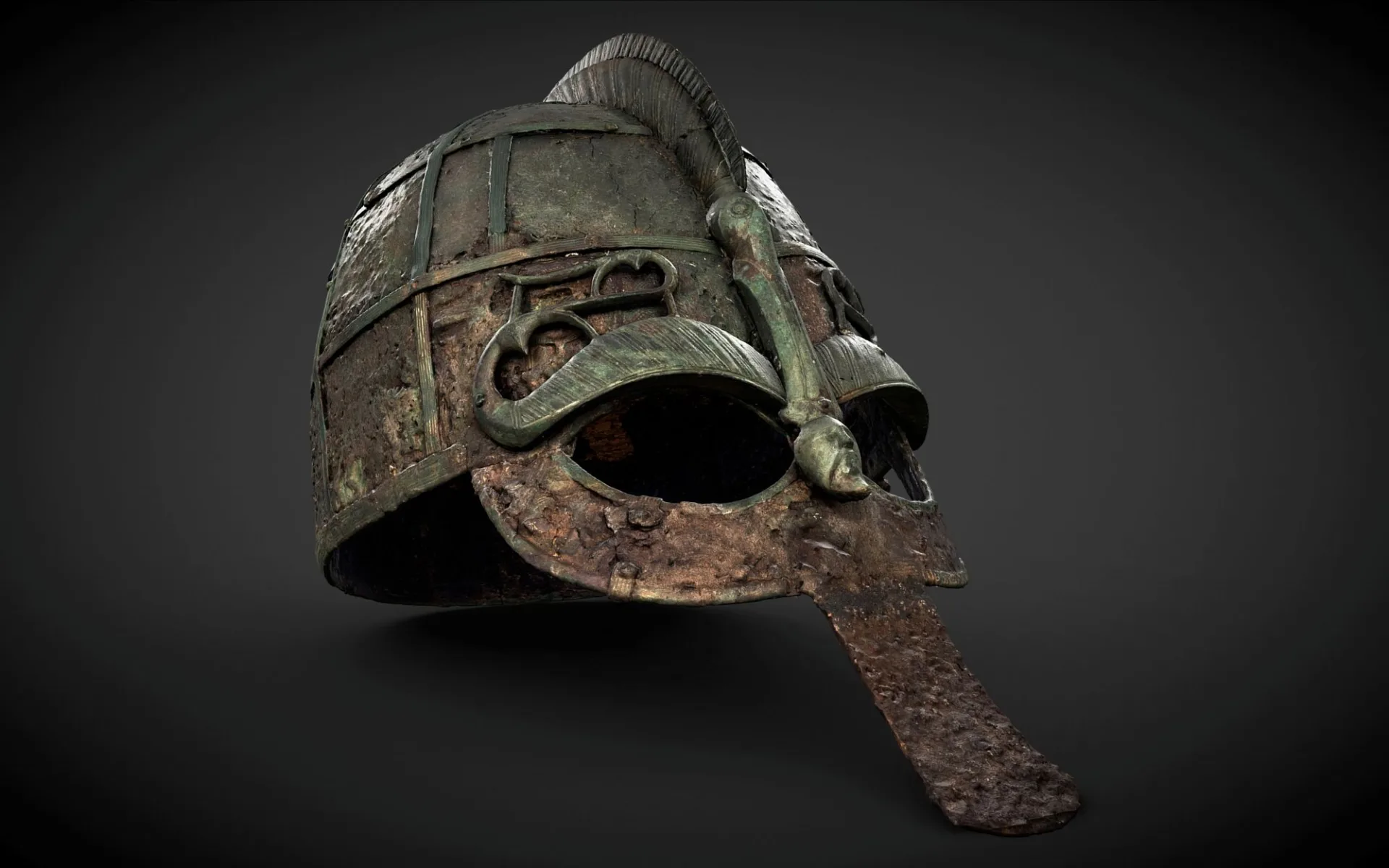
Helmets from the Vendel Period
The helmets come from the rich boat graves in Vendel, Valsgärde and Ultuna, and they represent the Vendel Period (circa 550–750 CE) like no other group of objects. The helmets are on display at the Swedish History Museum in Stockholm – and are now also available as 3D models for wider audiences around the world to explore.
See the Vendel helmets in the exhibitions Prehistories and in the Gold Room at the Swedish History Museum. You can also listen to the story of one of the helmets in our audio guide Highlights, where we present some of the museum’s top objects.
Listen to the Swedish History Museum highlights
Read more about the helmets and the 3D documentation
Campaign to protect and preserve
The European cultural heritage campaign “Twin it!” aims to encourage more countries to document their cultural heritage in 3D. The campaign gained momentum after the fire at Notre Dame in Paris in 2019. Sweden’s work with Twin it! is led by the Swedish National Heritage Board in collaboration with, among others, the National Historical Museums.
Part of a larger project
The National Historical Museums have 3D scanned the Vendel helmets as part of SweDigArch, a national research infrastructure for digital archaeology in which the National Heritage Board also participates. SweDigArch is led by Uppsala University and funded by the Swedish Research Council for the period 2022–2027. The documentation of the Vendel helmets is part of a larger effort in which a large number of objects and object fragments from the graves in Vendel have been digitized and made searchable.
In-depth article about the project on the National Heritage Board’s website
Read about Swedigarch on the research project’s website