3D: Vendel helmets
Bronze Age
1700 BC – 500 BC
Iron Age
500 BC – AD 1100
Viking Age
AD 800 – AD 1100
The iconic Vendel helmets from the rich boat graves in Vendel, Valsgärde, and Ultuna represent the Vendel Period like no other group of artifacts. They belong to the group of Nordic crested helmets, which also occur in the West Mound at Gamla Uppsala, and to which even the elaborate Anglo-Saxon helmet from Sutton Hoo belongs.
The helmets are characterized by their distinctive brow fittings (“spectacle helmets”) and their crest, which ends on both sides in animal heads. The neck guard consists of iron plate or chain mail. The surface of the helmets is decorated with richly ornamented pressed bronze foils. Vendel helmets are often confused with Viking Age helmets, of which—apart from the Norwegian helmet from Gjermundbu—not a single complete example has survived.
3D-model of Vendel I Helmet, Swedish History Museum/SHM, CC-BY 4.0.
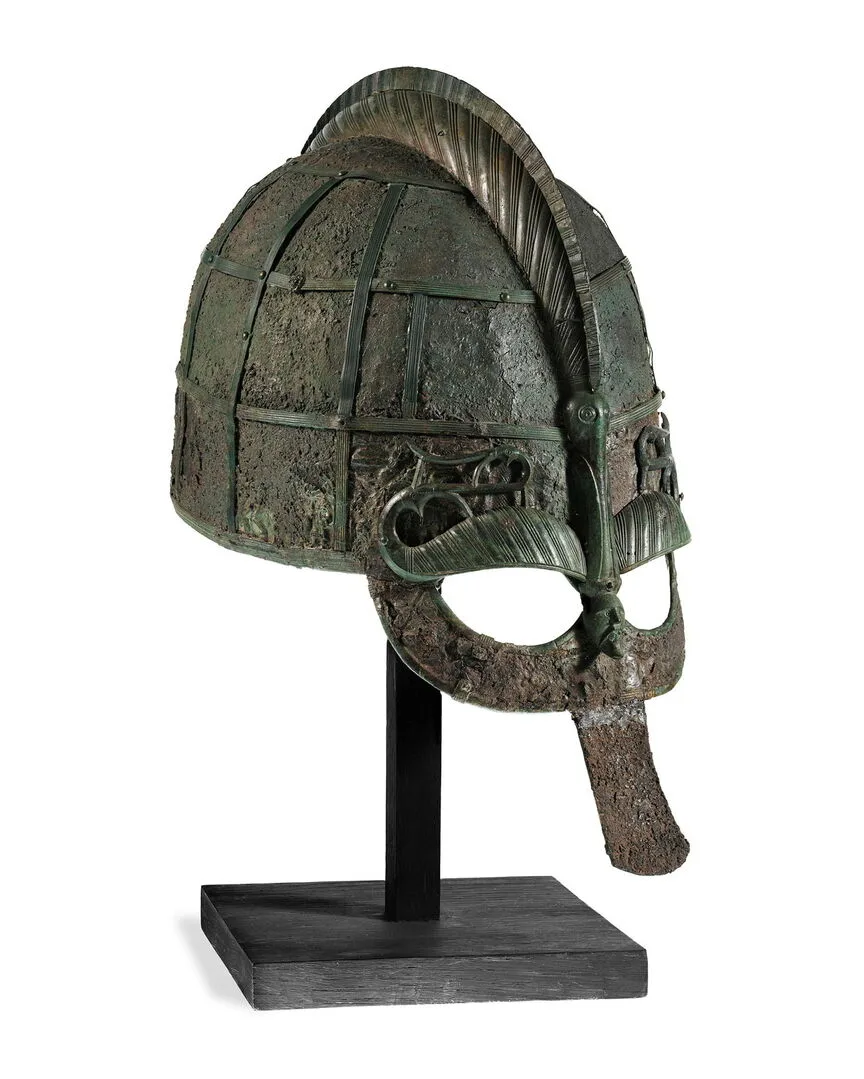
Vendel I Helmet
Original object that was 3D-scanned.
On view at Historiska museet in the exhibition Guldrummet
3D-model of Vendel XIV Helmet, Swedish History Museum/SHM, CC-BY 4.0.
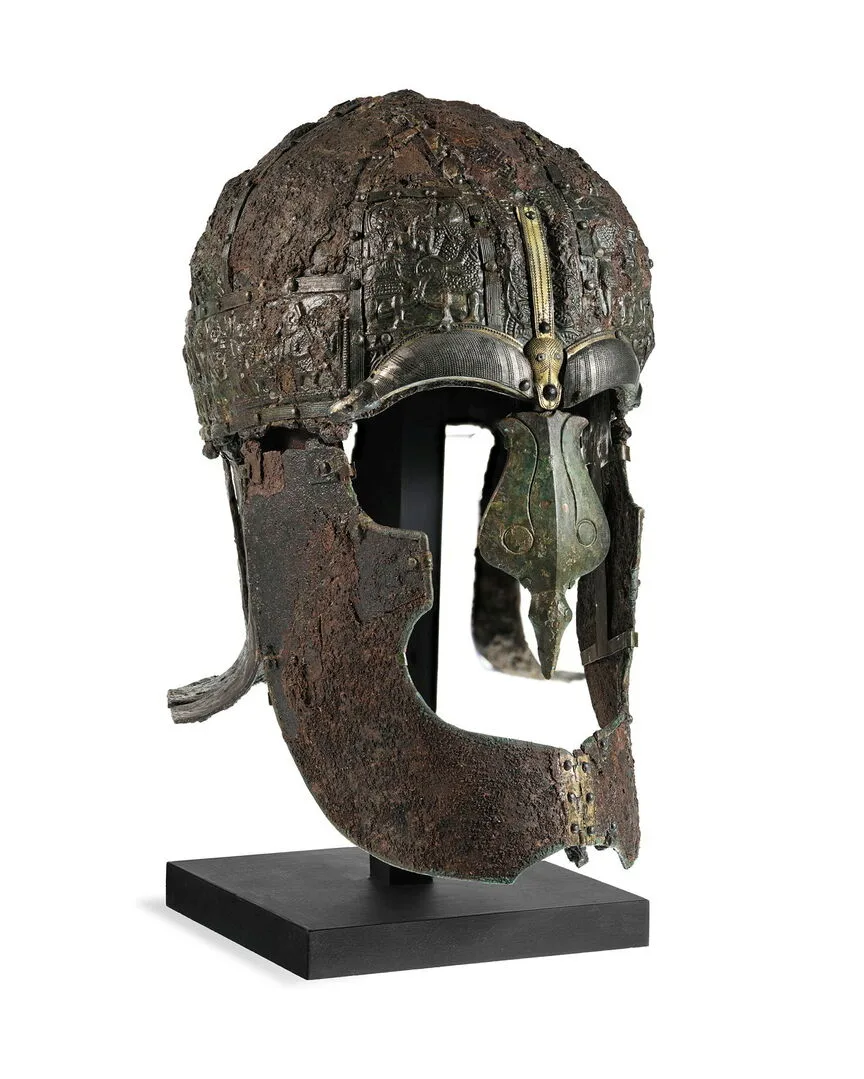
Vendel XIV Helmet
Original object that was 3D-scanned.
On view at Historiska museet in the exhibition Forntider
3D-model of Vendel XII Helmet, Swedish History Museum/SHM, CC-BY 4.0.
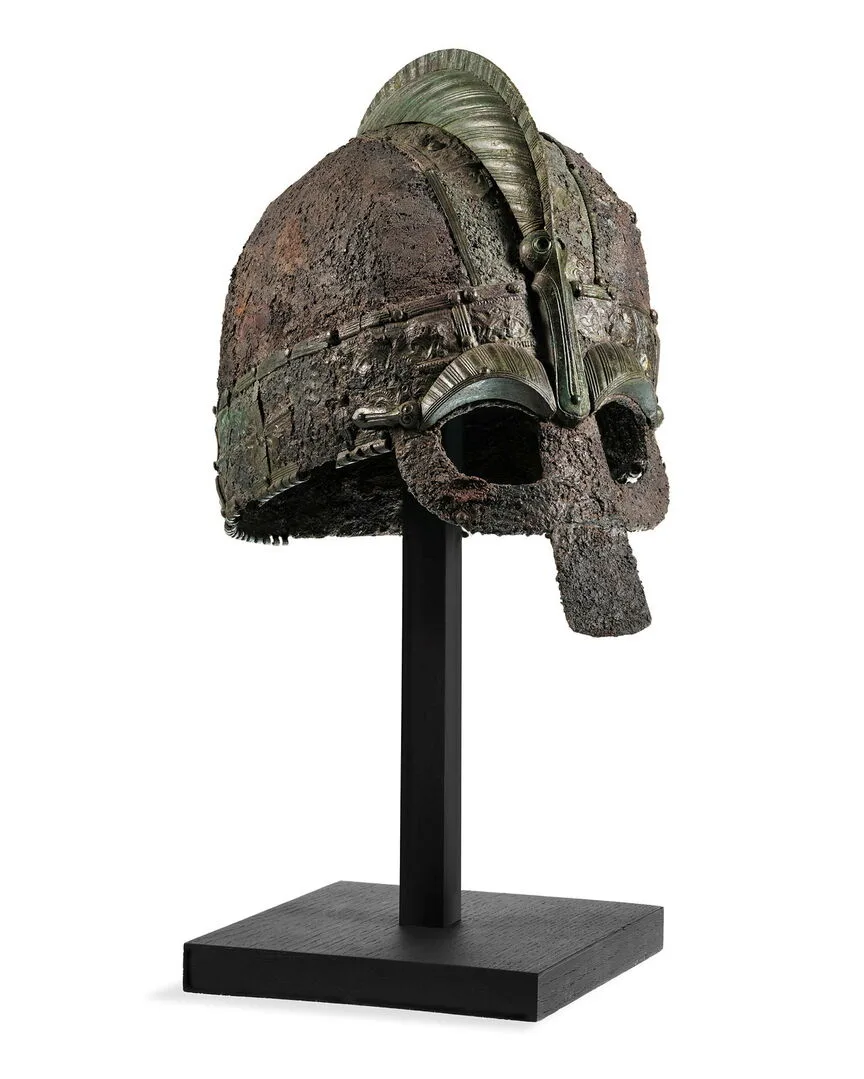
Vendel XII Helmet
Original object that was 3D-scanned.
On view at Historiska museet in the exhibition Forntider
Part of a research project and cultural heritage campaign
The Swedish National Historical Museums have 3D scanned these Vendel helmets as part of Swedigarch, a national research infrastructure for digital archaeology that also includes the Swedish National Heritage Board. Swedigarch is led by Uppsala University and funded by the Swedish Research Council from 2022 to 2027. The documentation of the Vendel helmets is part of a broader effort in which a large number of objects and fragments from the graves at Vendel have been digitized and made searchable.
The scanning of the Vendel helmets is also the Swedish National Historical Museums’ contribution to the European cultural heritage campaign “Twin it!” which aims to encourage more countries to document their cultural heritage in 3D. The campaign gained momentum following the fire at Notre-Dame in Paris in 2019. Sweden’s work with Twin it! is led by the Swedish National Heritage Board in collaboration with, among others, the Swedish National Historical Museums.
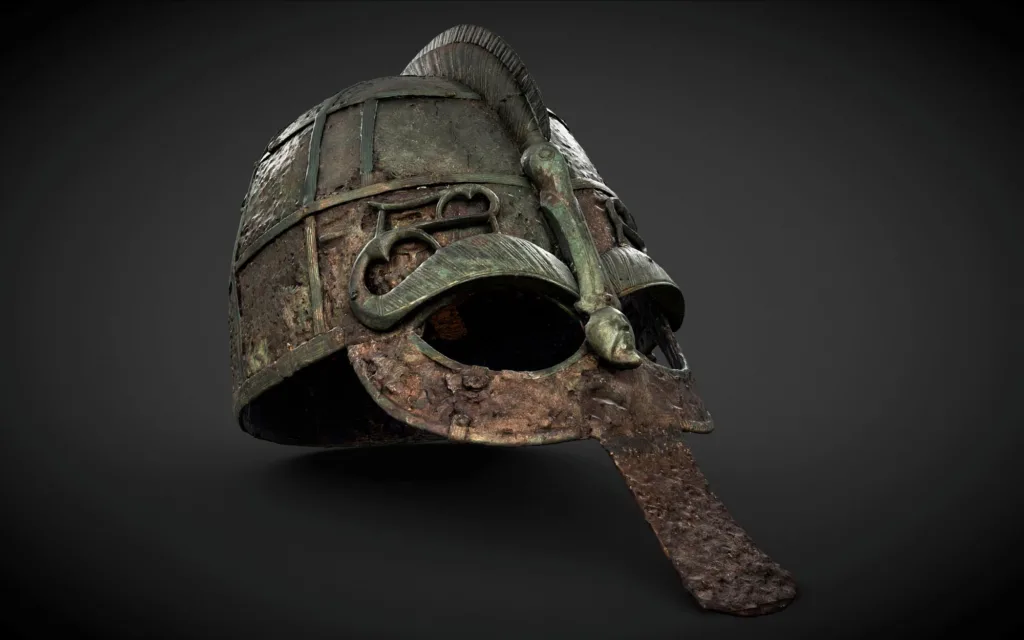
Digitisation in 3D
The Swedish History Museum is part of the government agency National Historical Museums. The organisation is constantly working to digitise its collections. One example of this work is the creation of 3D models of some of the museum’s objects.
How is a 3D model made?
A photographer takes a large number of still photos of an object from different angles. These images are then processed by computer software to create a digital version of the object – a 3D model. This technique is called photogrammetry or Structure from Motion (SfM).
In this way, 3D models of objects from the museum’s collections are continuously being created. The models are made available on the platforms Dynamic Collections, Zenodo and Sketchfab, where you can view, download and freely reuse them under an open licence. Have you used our 3D models to create something you’d like to share with us? Or would you like to get in touch with the department responsible for the 3D models? Feel free to email: bilder@shm.se